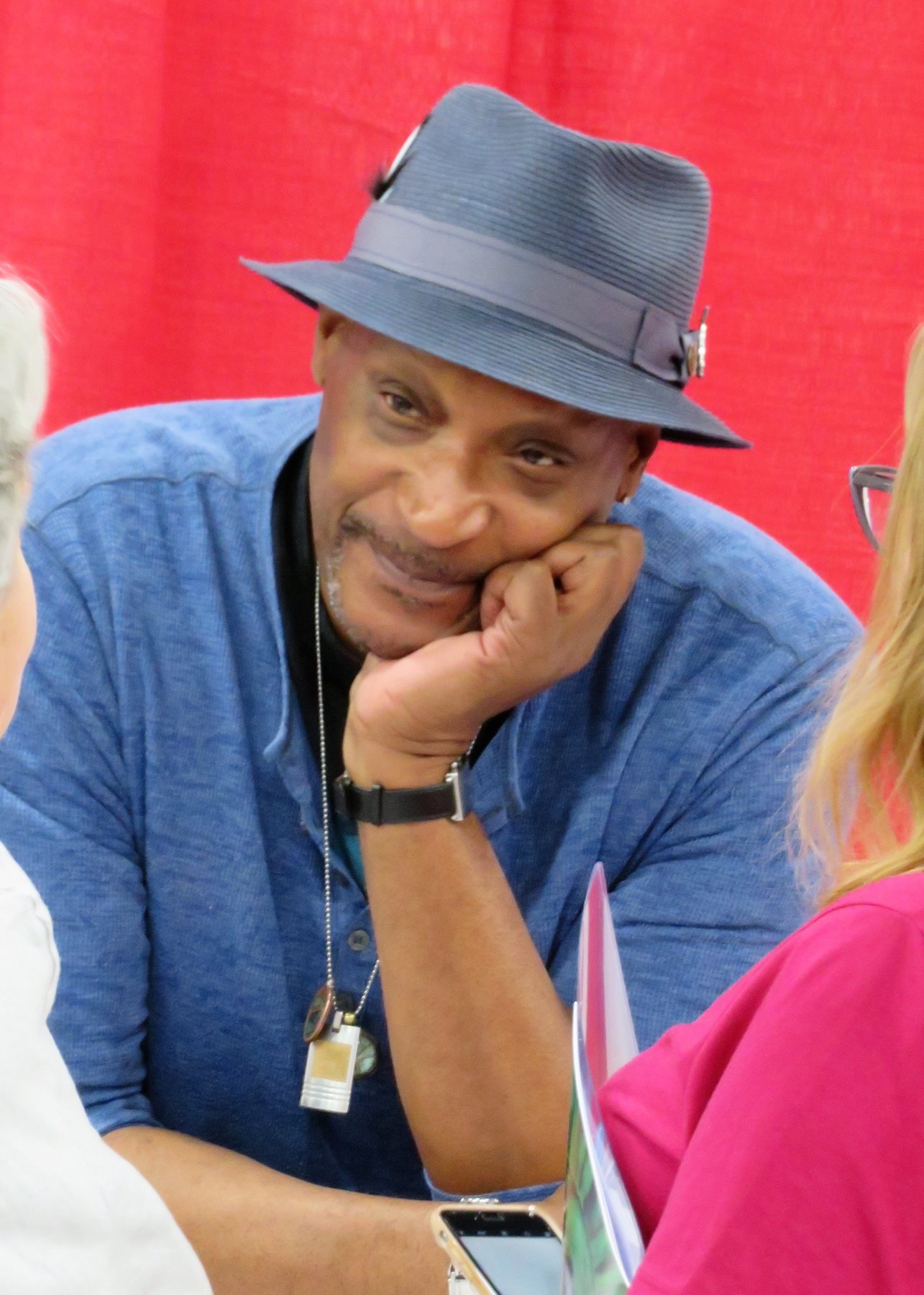
Say “Candyman” and the easy version of the movie appears immediately: mirror, hook, five repetitions, bad night. The actual 1992 film is much stranger than that. It’s a ghost story about stories — who tells them, who gets believed and what happens when a legend realizes being studied is almost as useful as being feared.
Bernard Rose’s Candyman, adapted from Clive Barker’s story “The Forbidden,” moves Barker’s premise into Chicago and builds its mythology around Cabrini-Green. Virginia Madsen plays Helen Lyle, a graduate student researching urban legends. Tony Todd plays the figure she initially treats as material for a thesis. That relationship — researcher and legend, skeptic and believer, observer and subject — gives the movie much more going on than “guy with hook kills people.”
Helen goes looking for a story and finds a story looking back
Helen begins from a position of distance. She can catalogue rumors, record interviews and compare versions of the Candyman legend. The ritual sounds like exactly the kind of dare that gets repeated at sleepovers: say his name into a mirror five times and he appears.
At first, the legend is useful because it’s not real to her. It’s a piece of folklore that can be mapped onto fears about violence, place and community. That confidence lets her walk into spaces where she assumes academic observation will protect her.
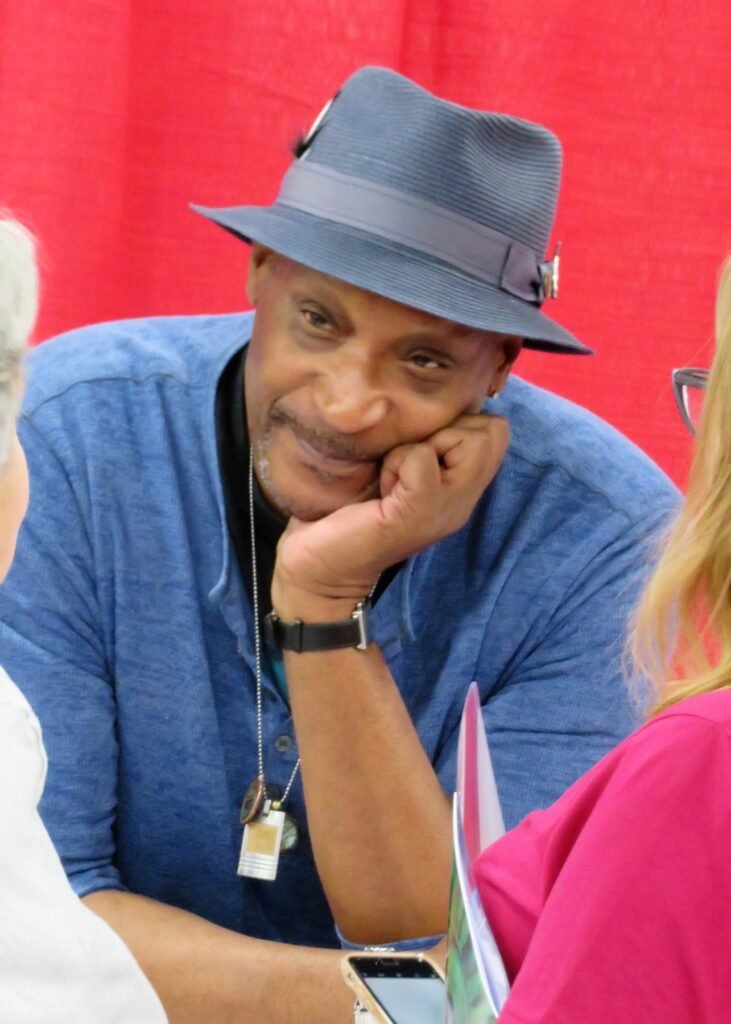
Then Candyman appears, and Todd’s performance changes the movie’s temperature. He isn’t frantic. He doesn’t need to sprint after anyone. His voice is calm enough to make the threat feel ceremonial. The character wants more than bodies; he wants belief.
Candyman needs the legend
This is the part that separates him from a straightforward slasher. Candyman’s power is tied to being remembered and repeated. If people stop believing, the legend dies. Helen’s skepticism is therefore not neutral. By trying to explain him away, she threatens the thing that keeps him alive.
His response is horrifying but logical within the movie’s mythology: make Helen part of the story. Destroy her credibility. Attach impossible events to her name. Turn the researcher into folklore.
That makes every retelling inside the film matter. People aren’t just delivering exposition. They’re participating in the mechanism. The story survives because somebody heard it from somebody else and then passed it along.
The move to Chicago changes everything
Barker’s original story was set around British housing estates. Rose’s film relocates the idea to Chicago and specifically invokes Cabrini-Green, bringing race, segregation, housing inequality and the way outsiders consume stories about dangerous neighborhoods into the film.
That choice gives Candyman enormous power, but it also makes the movie worth discussing critically rather than treating every choice as beyond question. Helen is a white academic entering a predominantly Black community and turning residents’ experiences into research. The film is aware of that distance, but it is still telling much of the story through her.
Candyman’s own backstory makes the racial history explicit. He was Daniel Robitaille, a Black artist murdered by a white mob after a relationship with a white woman. His supernatural violence grows out of historical violence, but the movie refuses to turn him into a simple symbol or a righteous avenger. He is tragic, romantic, cruel and manipulative all at once.
Tony Todd doesn’t play him like a standard slasher villain
The physical design is memorable — coat, hook, bees — but Todd’s voice may be the most important special effect. Candyman speaks like he expects to be listened to. He seduces, threatens and narrates. He doesn’t feel like a silent force of nature; he feels like somebody who has had a very long time to perfect his introduction.
That performance lets the movie drift into Gothic romance without losing the horror. Candyman wants Helen to “be his victim” in a way that is about death, immortality and story all at once. The relationship is not romantic in any healthy sense of the word, but the movie deliberately gives it the scale and language of a dark fairy tale.
The ending turns Helen into the thing she was studying
Helen dies after rescuing the baby from the bonfire, and the community mourns her. Then her husband, Trevor, performs the mirror ritual with Helen’s name. She appears and kills him.
It’s a perfect nasty little loop. Helen started the movie treating legends as objects. She ends as one.
The final transformation also underlines the movie’s central idea: folklore isn’t fixed. Stories mutate when they are retold. A new death, a new witness and a new name can alter the legend. Candyman wanted immortality through belief, and Helen learns — far too late — what that kind of immortality costs.
Watch the trailer
Why it is bigger than the hook
The mirror ritual is the part you can explain in one sentence, which is why it became the cultural shorthand. But Candyman lasts because the film keeps asking what a scary story actually does after somebody tells it.
It can entertain. It can warn. It can exploit real fear. It can preserve history in distorted form. It can give a dead man power. It can ruin the person who thinks she is standing safely outside it.
And, if you’re feeling brave, it can make you stare at your own reflection and count to five. Personally, four seems like plenty.
Leave a Reply