Psycho spends its first act teaching you to worry about stolen money. Then Alfred Hitchcock throws the money, the apparent main character, and your sense of what movie you’re watching straight down the drain.
That is the nastiest trick in Psycho, and it has nothing to do with a knife. The film hides its real monster in plain sight by giving us a different problem to solve first. Marion Crane steals $40,000, flees Phoenix, attracts the attention of a suspicious cop, trades cars, and makes a terrible decision to stop at a lonely roadside motel. We think we know the story.
The movie starts with the wrong crime
Marion’s theft is not a fake subplot. It matters because Hitchcock makes us invest in it completely. We understand why she takes the money, we watch her nerves fray on the road, and we start thinking like somebody who has just committed a crime. Every police glance feels dangerous. Every delay feels expensive.
By the time rain forces Marion off the highway and into the Bates Motel, the movie has trained us to ask one question: will she get caught?
Then Norman Bates appears.
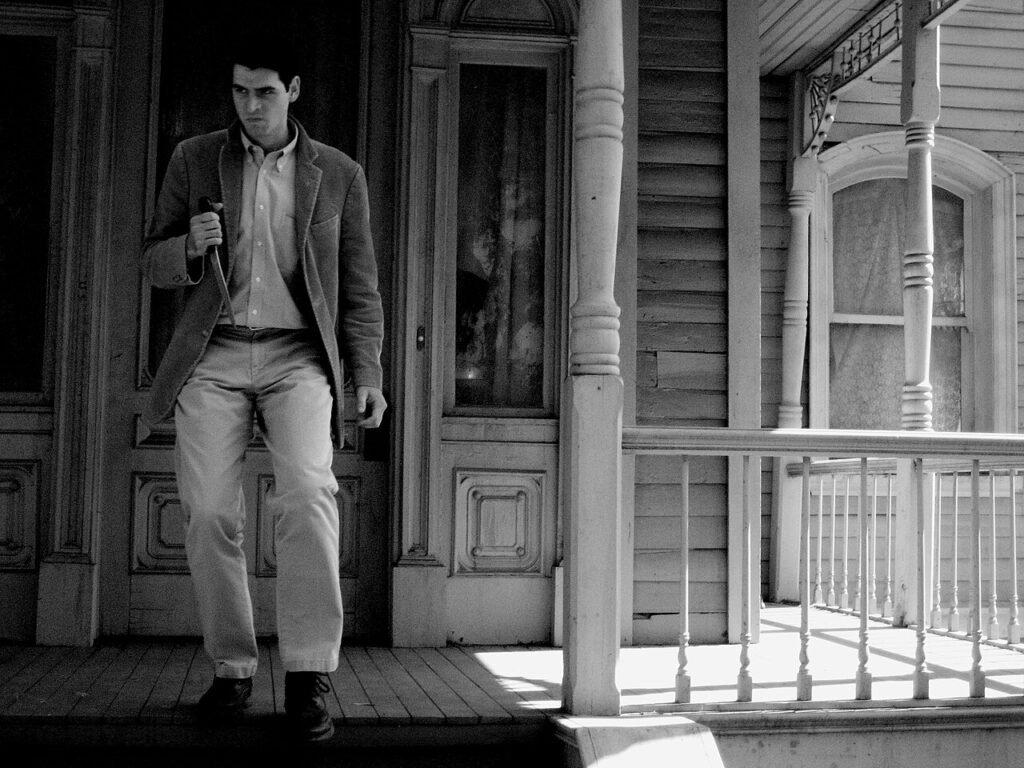
Anthony Perkins plays him as awkward, polite, lonely and just slightly too intense. He talks about his mother. He brings Marion food. He seems embarrassed by the life he is trapped inside. The parlor conversation is uncomfortable, but not in the obvious “here is your slasher villain” way. Norman feels like another sad person whose life has gone wrong.
That sympathy is useful. It is also a trap.
The Bates Motel is built for misdirection
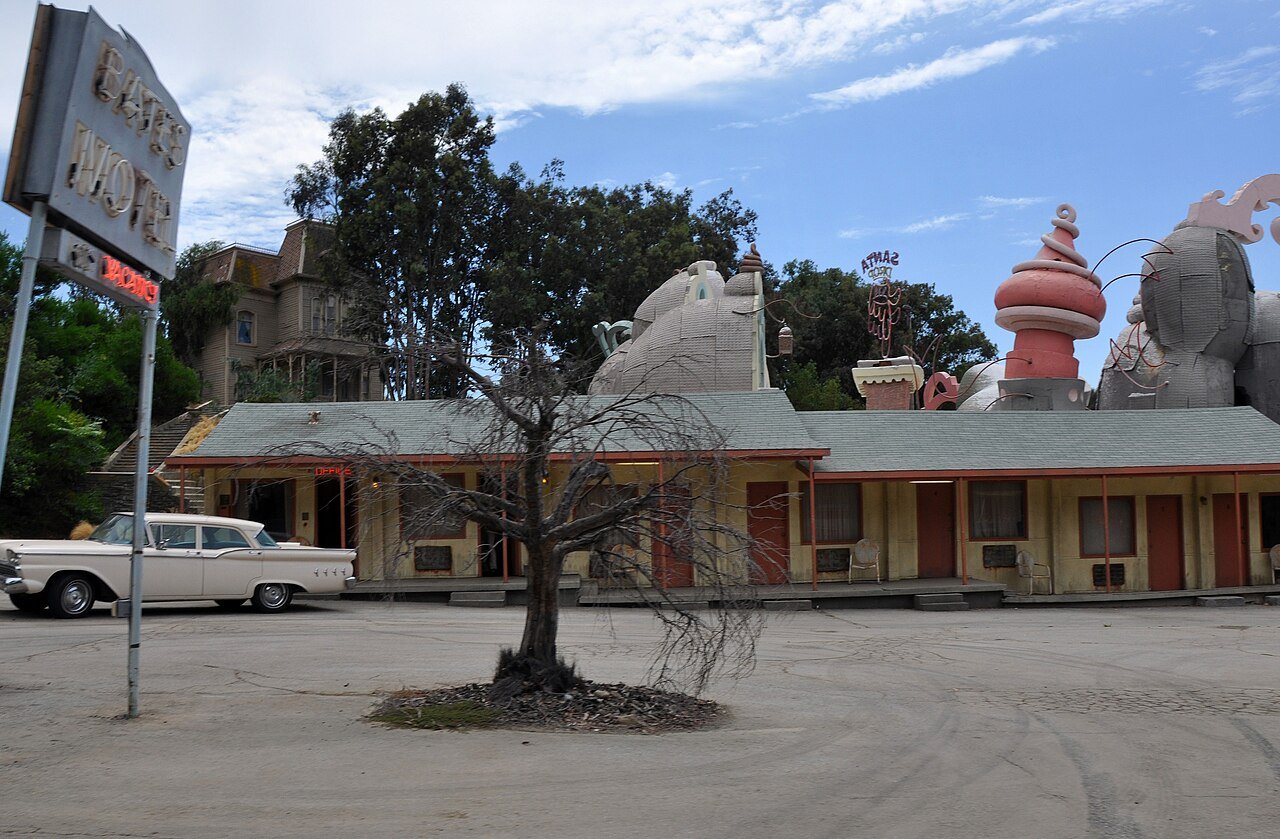
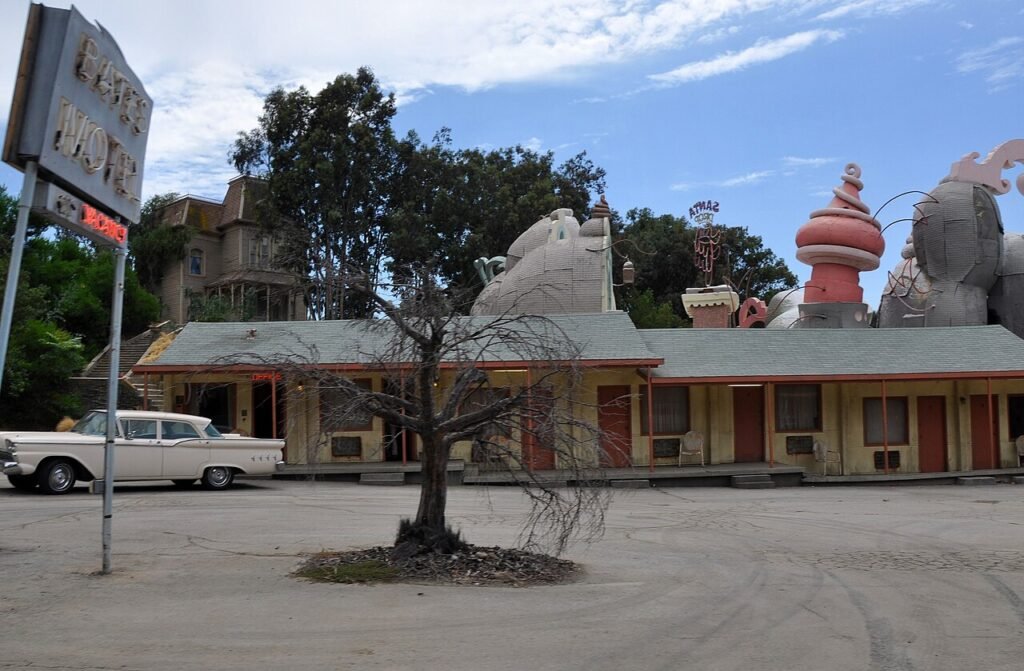
The motel is one of horror’s perfect little machines: a row of rooms, an office, a looming house on a hill and enough empty space around everything to make help feel theoretical. The house tells us there is another presence nearby. The motel tells us Norman controls the doors, keys and sightlines.
Hitchcock keeps putting the answer in front of us. Norman talks about Mother constantly. We hear arguments from the house. We see a female silhouette. Yet because cinema has trained us to accept off-screen characters and cutaway voices, the pieces register as information instead of evidence.
Then the star gets murdered
Marion decides to return the money. She has, in narrative terms, reached the point where a thriller protagonist might begin repairing the damage she caused. She steps into the shower. The famous attack lasts less than a minute, but the editing breaks it into a barrage of fragments: curtain, knife, body, water, drain, eye.
The shock is not just that the scene is violent. The shock is structural. Janet Leigh was the star we had been following. Marion carried the money, the guilt, the suspense and the apparent plot. Killing her means the movie can no longer be trusted to behave.
AFI’s production history notes that Hitchcock’s release campaign was built around secrecy and a “no admittance after picture start” policy. That sounds quaint now, when you can pause a movie because the pizza arrived, but it made perfect sense for Psycho. Arrive late and you might miss the woman the advertising told you was the lead. More importantly, the movie’s entire trick depends on experiencing the switch.
The grossest thing Norman does is make us help him
After the murder, Norman discovers the bathroom and cleans up. Hitchcock spends a surprising amount of time on the process. Norman wipes surfaces, wraps Marion’s body, loads her belongings into the car and pushes it into the swamp.
Then the car stops sinking.
For a few seconds, many viewers feel the same horrible little flicker of anxiety: come on, sink.
That reaction is the movie’s sick joke. We were worried about Marion getting caught. Now we are worried about Norman getting caught disposing of Marion. The film has transferred our suspense from victim to accomplice without asking permission.
When the car finally disappears beneath the mud, the relief feels dirty.
“Mother” is the disguise and the confession
The investigation eventually pulls Marion’s sister Lila and boyfriend Sam toward the Bates property. Private investigator Arbogast gets too close first. The house becomes the movie’s final locked box, and the fruit cellar contains the answer: Norman’s mother is dead. Norman preserved her body and created a “Mother” personality that can take control.
The reveal works because the film has never actually hidden Norman. It hides the category he belongs in.
We see him. We talk to him. We pity him. We watch him clean the crime scene. The “old woman” is the visual distraction that lets Norman stand beside the mystery instead of inside it.
That is much creepier than a villain appearing from nowhere. The monster has been checking you into Room 1.
And yes, Psycho still has a sense of humor
Hitchcock’s special trailer is basically the director giving a deadpan real-estate tour of a murder scene. The Bates Motel is treated like a tourist attraction before audiences even know exactly what happened there. That dry nastiness is all over the film. Psycho can be grim, but it is not humorless.
Norman’s taxidermy birds stare down at conversations. The detective keeps pressing where he is not wanted. The psychiatrist at the end attempts to put neat clinical labels on a movie that just spent nearly two hours making neat labels useless.
It is horror with a smirk you only notice after the knife is already out.
Watch the original trailer
The wrong door is the whole point
Plenty of later horror movies would build elaborate games around secret killers, false protagonists and last-minute reveals. Psycho feels so foundational because its deception is brutally simple. It gives us a door marked “Marion’s crime,” lets us stare at it for nearly half the movie, and quietly opens another door behind us.
The shower scene is immortal. The house is immortal. Norman’s smile is immortal. But the reason the movie still feels mean is that it makes the audience participate in its mistakes.
You do not fail to see the monster because Norman is invisible.
You fail because he looks like the nervous guy holding the room key.
Leave a Reply