Here is the argument horror fans have been having since 2002: 28 Days Later is a zombie movie. Also, its monsters are not technically zombies in the traditional undead sense. Both statements can be useful, which is why we are still yelling about it.
Danny Boyle and writer Alex Garland build the film around living people infected by the Rage virus. They do not climb out of graves. They do not need to be reanimated corpses. They are terrifying because infection turns ordinary human bodies into immediate, sprinting threats.
So yes, correct your friend if that brings you joy. Then admit the movie helped change what zombie horror looked and moved like.
Empty London is the movie’s first monster
Jim wakes from a coma in a hospital and walks outside to find London almost completely empty. Streets designed for crowds become enormous blank spaces. Trash blows around. Money lies on the ground. A red bus is overturned. Familiar landmarks look wrong because nobody is using them.
That sequence is still one of the film’s most powerful ideas because it makes civilization itself feel recently abandoned.
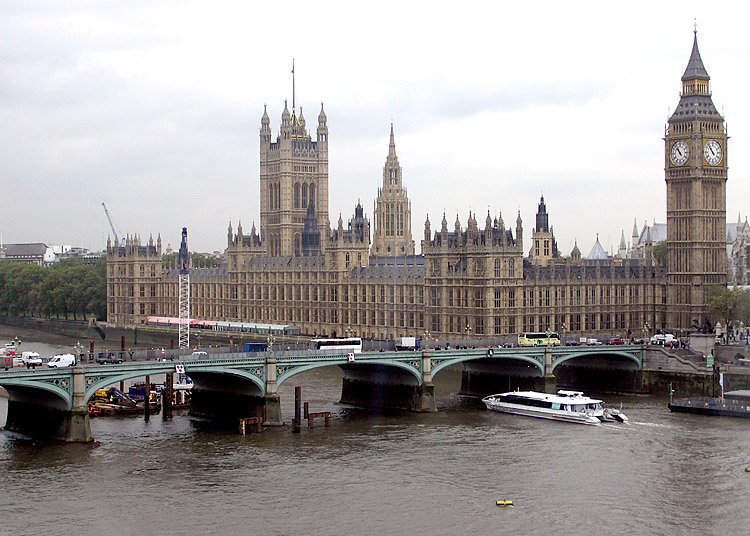
The image above is Westminster Bridge in ordinary life. In the movie, spaces like this become uncanny through absence. London has not been destroyed into science-fiction rubble. It has simply stopped functioning.
That is cheaper than blowing up Parliament and, emotionally, much stranger.
The infected do not shuffle, and that changed the temperature
The Rage-infected attack with speed and aggression. That simple choice changes the entire rhythm of survival.
With slow undead, distance can be safety. A fence gives you time. A hallway can become manageable if you stay calm. In 28 Days Later, a small mistake can cross the room almost instantly.
The infected are not interesting because they are strategic masterminds. They are interesting because human speed has been turned against humans.
Later horror did not invent fast zombies here — the history is messier than one movie receiving a patent — but 28 Days Later made frantic infected hordes feel newly central to mainstream horror conversation.
The digital video makes the apocalypse look sick
The movie’s early-digital image is rough, smeared and sometimes ugly in a way that became part of its identity. Contemporary reviews noted Boyle’s use of digital video, especially in those deserted London streets.
That texture helps because the movie is not trying to make the apocalypse beautiful. Motion blurs. Bright areas clip. Night scenes become harsh. The world looks captured rather than presented.
Boyle has always been an energetic filmmaker, and 28 Days Later uses that energy in opposite directions. The empty-city passages can feel eerily still; attacks become bursts of visual panic. Calm never feels like safety. It feels like the space before another sprint.
The “zombie” argument misses what the virus is doing thematically
Calling the infected living humans is not just trivia. It changes the moral shape of the story.
The Rage virus takes something recognizably human — anger — and removes almost everything else. The opening connects the infection to images of violence. Later, the film repeatedly asks whether the uninfected are actually better at controlling their own brutality.
That question becomes unavoidable at the military compound.
Major Henry West and his soldiers initially look like the organized answer to chaos: weapons, walls, uniforms, a plan. Then Jim, Selena and Hannah discover the plan includes horrifying intentions for the women. The safe compound becomes another kind of infection.
No virus required.
Jim’s transformation deliberately blurs the line
When Jim fights back, the film shoots him with the same ferocity it uses for the infected. He moves through the compound in darkness and rain, turning the soldiers’ defenses against them.
Selena briefly hesitates when she sees him because, visually and behaviorally, the difference has become difficult to read.
That is the movie’s thematic knife twist. Rage is not only a laboratory pathogen. The virus gives the film a literal monster, but ordinary people can still choose cruelty without being infected.
The movie is surprisingly interested in small comforts
For all the speed and blood, 28 Days Later works because it spends time on temporary family.
Jim meets Selena. They join Frank and Hannah. A supermarket becomes a brief playground where abundance is available because society has vanished. They joke. They shop. Frank takes a moment to enjoy something as basic as water.
Those pauses are not filler. They define what survival is for.
If the movie were only about avoiding infection, survival would be a biological condition. Instead, it keeps asking whether people can build a life worth surviving for.
Watch the official trailer
Zombie movie? Sure. Undead movie? Not really.
The infected are alive. Sony’s own synopsis describes a virus that sends victims into murderous rage. That makes 28 Days Later different from the classic reanimated-corpse model.
But genres are not tax forms.
The film uses the structure, anxieties and survival language of zombie cinema so effectively that pretending it has nothing to do with the subgenre is just as silly as pretending the biological distinction does not exist.
Call them infected. Call it a zombie movie. Call it the reason you started checking whether that distant running figure was moving a little too fast.
Just do not stand there arguing when it gets closer.
Leave a Reply