
The Blair Witch Project does not show you a witch. It barely shows you anything you would traditionally call a monster. What it gives you instead is a bag of evidence and the deeply unpleasant feeling that you are supposed to figure out what happened.
That was the magic trick in 1999. The movie did not just imitate amateur footage. Its production and marketing encouraged audiences to treat the footage like an artifact. The woods became a crime scene. The camera became a witness. Every stupid little noise suddenly felt admissible in court.

The movie’s best special effect is uncertainty
Three student filmmakers — Heather, Josh and Mike — head into the woods near Burkittsville, Maryland, to make a documentary about a local legend. They interview residents, walk into the forest, get lost and slowly realize that being lost may not be the biggest problem.
That is basically the movie.
No giant mythology lecture arrives to organize everything. There is no scene where an expert circles the witch’s weakness on a chalkboard. The characters have scraps of folklore, a map they stop having, and whatever their cameras can capture.
That limited information turns tiny events into horror. Stone piles appear outside the tents. Stick figures hang from trees. Somebody hears children. Josh disappears. His friends receive something wrapped in cloth that they do not particularly want to inspect.
The movie keeps asking the audience to lean closer.
The cameras make bad images useful
Traditional filmmaking tries to put the important thing in frame. Blair Witch makes horror out of the possibility that the important thing is just outside it.
The footage shakes because people are running. Focus disappears. The camera points at trees instead of answers. Arguments happen while somebody keeps filming for reasons that become increasingly ridiculous and psychologically believable.
That roughness is not simply “cheap-looking.” It changes what counts as evidence.
If a polished horror movie points the camera toward a dark doorway, you know the doorway matters. In Blair Witch, the camera can point anywhere. The lack of composition makes the whole forest suspicious.
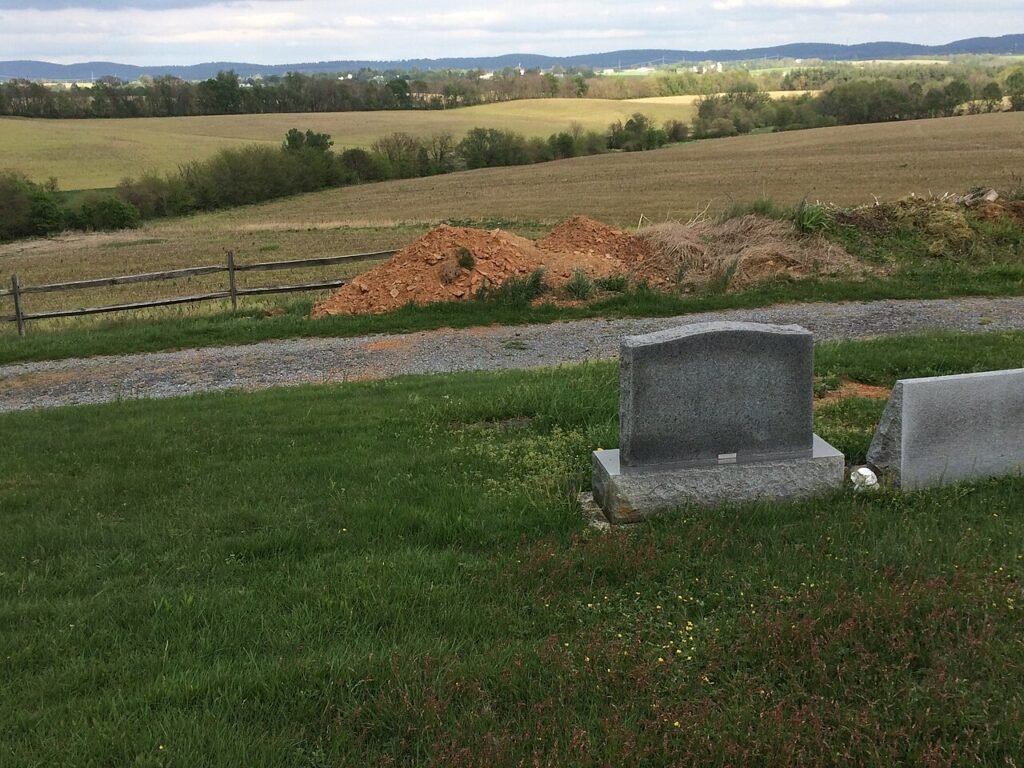
The photo above is a recreation made in Burkittsville that leans into one of the funniest truths about the film’s visual language: a completely unhelpful object can dominate the frame while somebody is having the worst day of their life. Found footage turned “bad framing” into tension. Sometimes it also turned it into accidental comedy.
The actors had to live inside the format
The production’s stripped-down method helped create that texture. The shoot was famously brief and heavily improvised. The performers moved through the woods carrying cameras and received limited information about what was waiting for them.
That does not mean the movie is a documentary or that every reaction was somehow “real.” It means the filmmaking process was designed to produce messy, immediate behavior instead of polished line readings.
You can feel exhaustion accumulating. Arguments become petty because people who are cold, hungry, lost and scared do not become better conversationalists.
One of the movie’s smartest choices is letting the characters be annoying. Polite, perfectly rational campers would feel written. These three blame each other, snap, joke badly and keep making decisions under pressure.
The website made the movie bigger than the screen
Before wide release, the filmmakers and distributors used the early web to extend the fiction. The original marketing presented the students’ disappearance with fabricated documents and a missing-person style mythology. Contemporary reporting described the website as unfolding the legend as though it were authentic.
That sounds normal now because every franchise has lore pages, fake corporate accounts and elaborate social campaigns. In the late 90’s, it felt different. The internet still had enough rough edges that an ugly page full of “evidence” could feel less like advertising and more like something somebody had found.
The campaign did not need every viewer to literally believe the footage was real. It only needed uncertainty to survive long enough to make the movie feel contaminated by reality.
The final house is frightening because the camera still refuses to help
Heather and Mike eventually discover an abandoned house in the woods. Josh’s voice seems to pull them inside. Mike runs downstairs. The camera drops.
Heather follows.
In the basement, she sees Mike standing in a corner. Earlier folklore in the film described a murderer forcing one child to face the corner while another was killed. Heather screams. The camera falls. The film ends.
No witch steps forward for a close-up. No explanatory caption appears. The footage simply stops.
That ending works because the movie has trained us to treat camera failure as information. A dropped camera is not a technical problem. It is the final piece of evidence.
Found footage did not begin here, but this is the movie that made everybody notice
There were faux-documentary and found-media experiments before The Blair Witch Project. What this film did spectacularly well was combine form, production method and marketing into one experience.
Afterward, the format became a horror toolbox: security cameras, home video, webcams, phones, police footage, livestreams, body cams. The technology changes. The promise stays the same.
This looks like something you were not supposed to see.
Watch the trailer
The woods feel like evidence because nothing gets resolved
Rewatching Blair Witch after decades of found-footage movies can make its tricks easier to see. It can also make the restraint feel more impressive.
The film understands that showing the monster would settle an argument. It would give the audience an object to analyze: design, size, movement, makeup, CGI, whatever. Instead, it gives us consequences without the responsible party.
The forest does not confess.
We just keep watching the tape.
Leave a Reply