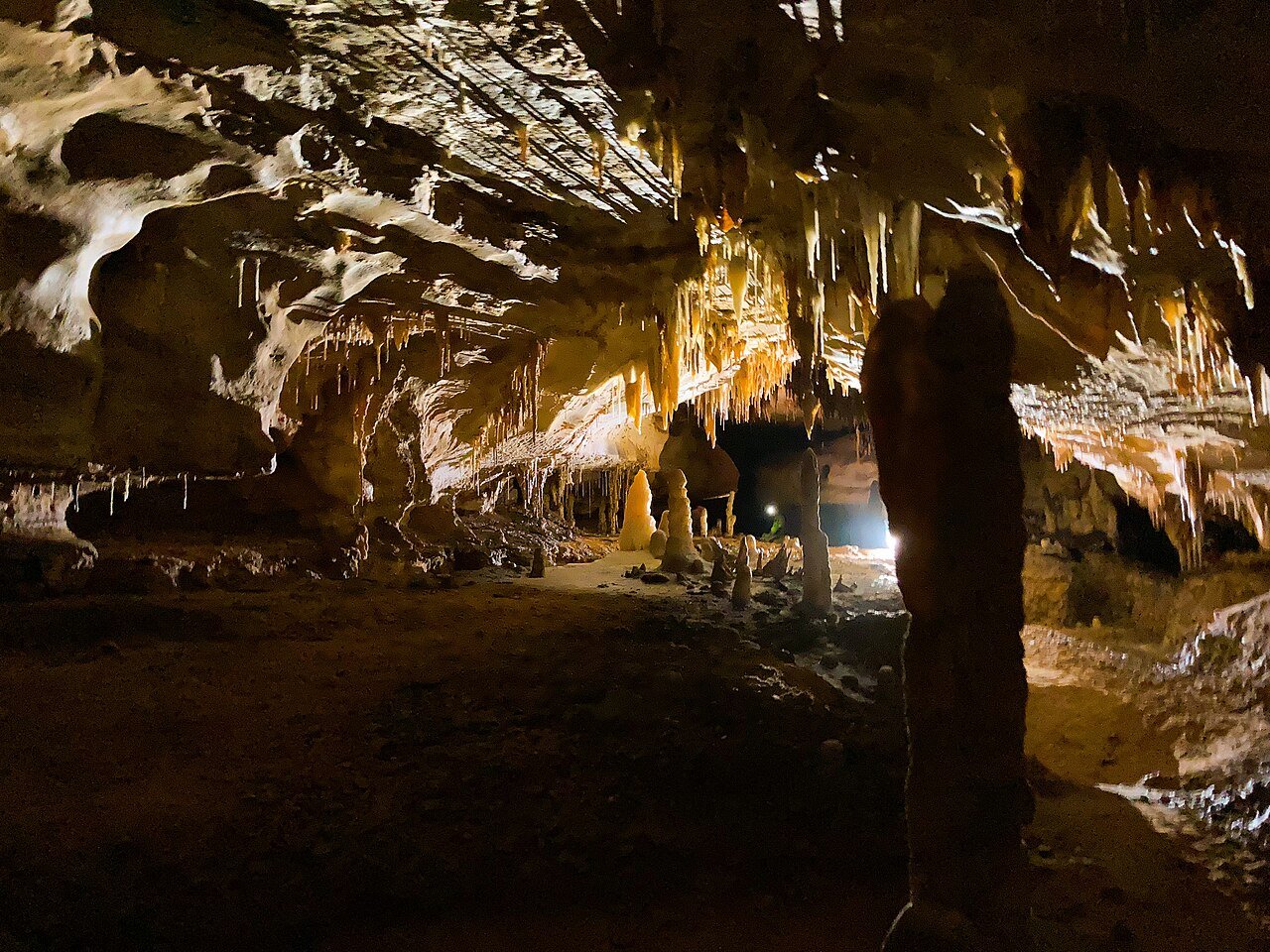
The Descent could remove every crawler from the movie and still make a respectable number of viewers swear off caves forever. That is not an insult to the monsters. It is a compliment to how thoroughly the film weaponizes being underground.
Neil Marshall’s 2005 horror movie understands something basic: if a tunnel is narrow enough, the environment does not need teeth.
The cave is already trying to kill everybody
Sarah joins friends Juno, Beth, Rebecca, Sam and Holly for a caving trip after a devastating personal loss. What begins as an attempt to reconnect becomes a survival problem almost immediately.
A passage collapses. The route is unfamiliar. Their supplies are limited. Juno reveals she led the group into an unexplored cave system instead of the documented one everyone thought they were entering.
That reveal is horrifying because it removes the easiest form of hope. Nobody outside knows where they actually are.
Before a monster appears, the group is dealing with injury, darkness, falling rock, bad maps, tight passages and the knowledge that the ceiling has several million tons of confidence.
The squeeze sequence is basically a panic attack with production design
Sarah crawling through a narrow tunnel is one of the movie’s most effective scenes because the danger is visually boring on paper. It is a person moving through a small space.
Marshall turns that into torture.
Sarah cannot easily turn around. The rock is inches from her face. Her breathing changes. The camera cannot back away enough to provide relief. When she starts to panic, the audience understands the mechanics immediately: panic makes breathing harder, fast movement is difficult, and there is nowhere to stand up and reset.
Claustrophobia becomes plot.
Those caves were sets, which somehow makes the trick better
Marshall has said the cave environments were built rather than filmed in a real cave. Cinematographer Sam McCurdy has also discussed the constructed cave surfaces and the importance of deep blacks in making the environment work.
That artificiality gave the filmmakers control over an environment that is supposed to feel uncontrollable.

They could move walls, choose exactly how much darkness swallowed the background, and light scenes from the characters’ own practical sources: headlamps, flares, torches and other portable light. The cave keeps changing color and shape because the available light keeps changing.
Red flare light turns rock into something infernal. Green night vision turns people into ghosts. Darkness hides scale.
You rarely get a clean mental map, which is exactly what the characters lack.
Then the movie adds crawlers because apparently a cave was not enough
The humanoid creatures living underground arrive after the film has established the environment as a complete horror system on its own.
That timing is crucial.
If a crawler jumped out in the first ten minutes, we would understand the cave as a monster lair. Instead, we first learn that rock, depth and bad decisions can kill you. When the creatures finally appear, they do not replace that threat. They stack on top of it.
The crawlers are pale, adapted to darkness and frighteningly comfortable in terrain where the women are struggling to move. The humans are visitors. The crawlers are home.
The first clear sighting is a great “wait, go back” scare
One of the movie’s smartest reveals happens through night vision. The group is trying to see in near-total darkness. The camera pans. A creature is simply there behind them.
It is not introduced with a speech. It occupies a space the audience thought was empty.
That is the monster version of the cave’s entire strategy. Safety keeps turning out to be temporary because there is always another space you failed to read correctly.
The friendships are another collapsing tunnel
The Descent is not content with geographical pressure. The group carries resentment, grief and secrets underground with them.
Juno’s decision to choose the unexplored cave is a huge betrayal of trust. The film also reveals emotional history between Juno and Sarah’s late husband. Then, during a chaotic attack, Juno accidentally fatally wounds Beth and leaves her behind.
By the time Sarah learns what happened, the survival story has become personal.
The cave strips away polite distance. There is nowhere to postpone the conversation until next week.
Sarah becomes frightening in her own right
The movie begins with Sarah traumatized and emotionally fragile. Underground, survival reshapes her. By the later sections she is blood-covered, focused and capable of brutal choices.
That transformation works because the film does not treat “strength” as becoming magically unafraid. Sarah is terrified. She simply becomes able to act inside the terror.
The final image of her emerging from a pool of blood is not subtle. It also does not need to be. The Descent has spent the entire movie pushing her downward physically and psychologically.
When she rises, she looks like something the cave made.
Watch the trailer
The monsters are the second reason not to go caving
The crawlers are excellent creatures. Their movement, pale bodies and home-field advantage make them memorable.
But the film’s real flex is making us scared before they arrive.
By the time something starts hunting the group, we already understand there is no easy exit, nobody knows their location, one injury can slow everyone, light is temporary and the walls do not care.
The creatures are almost rude for piling on.
So if somebody invites you on an “unexplored cave adventure,” remember the most important lesson in The Descent: brunch exists above ground.
Leave a Reply