If your memory of Hellraiser is “Pinhead and some hooks,” the actual movie is waiting to surprise you. The first Hellraiser is less a slasher than a filthy Gothic love story about desire, betrayal and one catastrophically bad relationship.
The Cenobites are unforgettable, but they are not the engine. Julia is.
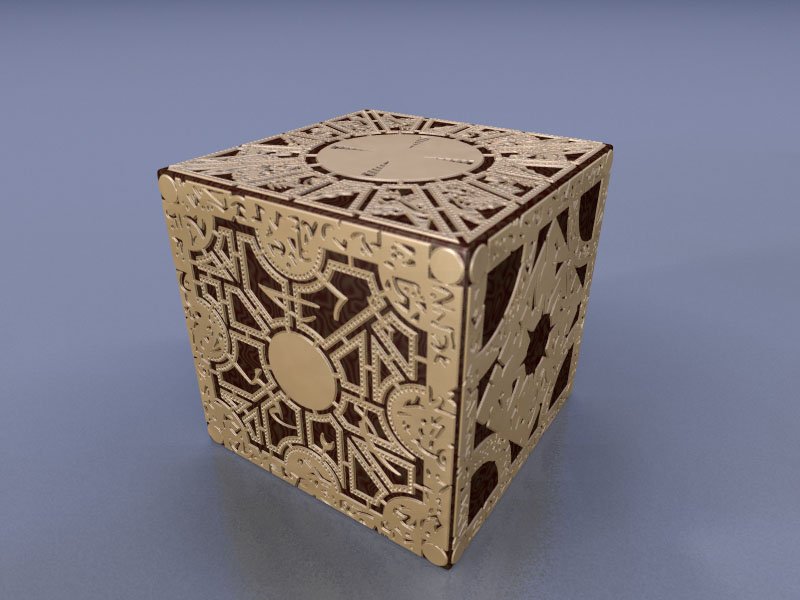
The puzzle box does not summon a standard movie monster
Frank Cotton is chasing sensation when he opens the mysterious puzzle box known as the Lament Configuration. He gets what he asked for in the worst possible sense. Chains and hooks tear him apart, and the Cenobites claim what remains.
That opening establishes the rules without giving us a simple moral. Frank is not an innocent victim who accidentally reads the wrong Latin inscription. He went looking for an experience beyond ordinary pleasure. The Cenobites answer with a version of pleasure and pain where the distinction has basically been removed.
The box is scary because it looks elegant. You can hold it. Turn it. Solve it. It is not covered in warning stickers saying PLEASE DO NOT OPEN DIMENSIONAL TORTURE CUSTOMER SERVICE.
The real horror starts when Julia decides she still wants Frank
Larry Cotton moves into the family house with his wife Julia and daughter Kirsty. A small accident spills Larry’s blood onto the attic floor — the place where Frank was destroyed — and something begins rebuilding itself.
That something is Frank, but not enough Frank to go outside.
Julia discovers him in the attic. She had an affair with Frank before marrying Larry, and the attraction has not exactly cooled just because Frank currently resembles a wet anatomy exhibit. He needs blood to restore his body. Julia starts bringing men home.
This is where Hellraiser becomes wonderfully nasty. Julia is not hypnotized by a demon. She makes choices. She lies, lures and kills because the promise of Frank still controls her.
The Cenobites may have hooks. Julia has agency.
Frank’s resurrection is body horror with a purpose
The effects are gloriously tactile: fluid, bone, tendons, flesh. Frank does not pop back into existence. He grows in stages, and every stage looks like the human body has been assembled by somebody working from incomplete instructions.
That physical ugliness mirrors what is happening emotionally. Julia is rebuilding an old desire one victim at a time. The more complete Frank becomes, the clearer it is that the fantasy she is reconstructing was rotten before he ever lost his skin.
Body horror is doing character work.

Clive Barker adapted the story from his novella The Hellbound Heart and made Hellraiser his feature directing debut. That authorial closeness matters. The movie is full of ideas that do not fit comfortably into the usual 80’s slasher box: erotic obsession, forbidden thresholds, flesh as both temptation and punishment, monsters who behave more like priests of an alien sensation than masked killers.
The Cenobites are scarier because they have rules
Pinhead, the Female Cenobite, Butterball and Chatterer do not spend the movie randomly stalking teenagers. They arrive in response to the box. They speak. They negotiate. They believe they are offering an experience according to their own logic.
That makes them feel less like animals and more like officials.
There is something uniquely unpleasant about a monster that seems to have paperwork.
When Kirsty solves the box and encounters them, she bargains by offering Frank, an escapee from their realm. They listen because the bargain aligns with what they want. The scene gives Kirsty room to survive through nerve and information rather than simply outrunning everybody.
Kirsty is the normal person trapped inside everybody else’s bad decisions
Ashley Laurence’s Kirsty gives the movie its human center. She did not open the box for forbidden sensation. She did not murder strangers to rebuild an ex-lover. She is pulled into the horror because the adults around her have turned family history into a minefield.
That matters because Hellraiser could easily drown in its own mythology. Kirsty keeps it grounded. Her reactions tell us exactly how insane this is supposed to feel even as the movie introduces more elaborate supernatural rules.
She also learns fast. When she understands Frank is the fugitive the Cenobites want, she weaponizes that fact.
Pinhead became the franchise face, but Frank and Julia are the first movie’s poison
Later marketing made Pinhead an icon, understandably. Doug Bradley’s severe delivery, the geometric wounds, the black leather and the calm authority are instantly recognizable.
But watch the 1987 film again and the emotional villainy belongs much closer to home.
Frank uses desire as leverage. Julia keeps crossing lines for him. Larry trusts people he should not. Kirsty gets trapped in the wreckage. The supernatural beings are almost the consequences arriving to collect.
That is why calling Hellraiser a love story from hell is only partly a joke. It really is about what somebody will do for a desire she refuses to bury.
The answer is: considerably more than would be advisable.
Watch the trailer
The hooks are almost the easy part
What keeps Hellraiser nasty is that the supernatural horror is attached to recognizable human appetites. Frank wants more. Julia wants Frank. Everybody around them pays the bill.
The Cenobites are frightening because they take those appetites literally and push them past the limits of ordinary bodies.
The puzzle box is not just a door to monsters. It is a door somebody wanted opened.
That is worse.
Leave a Reply