The Return of the Living Dead is very funny right up until you notice the zombies are smarter, harder to kill and considerably more miserable than the ones everybody thought they knew.
Dan O’Bannon’s 1985 punk-horror comedy takes familiar living-dead expectations, grins at them, and then starts changing the rules. The dead can talk. They can plan. Destroying the brain does not conveniently solve everything. And yes, they want brains.
That last one escaped the movie so completely that it became a generic zombie joke. Plenty of people who have never seen Return still know how to do the voice.

First, it picks a fight with the old rules
O’Bannon had already written one of science fiction horror’s great workplace disasters with Alien. Here he turns a medical-supply warehouse into another place where employees should probably have received better safety training.
Foreman Frank shows new hire Freddy a military canister supposedly connected to the events that inspired Night of the Living Dead. The canister leaks. The chemical Trioxin gets into the air. A cadaver wakes up. Things deteriorate with impressive efficiency.
The movie is not a sequel to George A. Romero’s Night of the Living Dead, but it plays with the cultural memory of it. Characters think they know zombie procedure because they have seen a zombie movie. Then procedure fails.
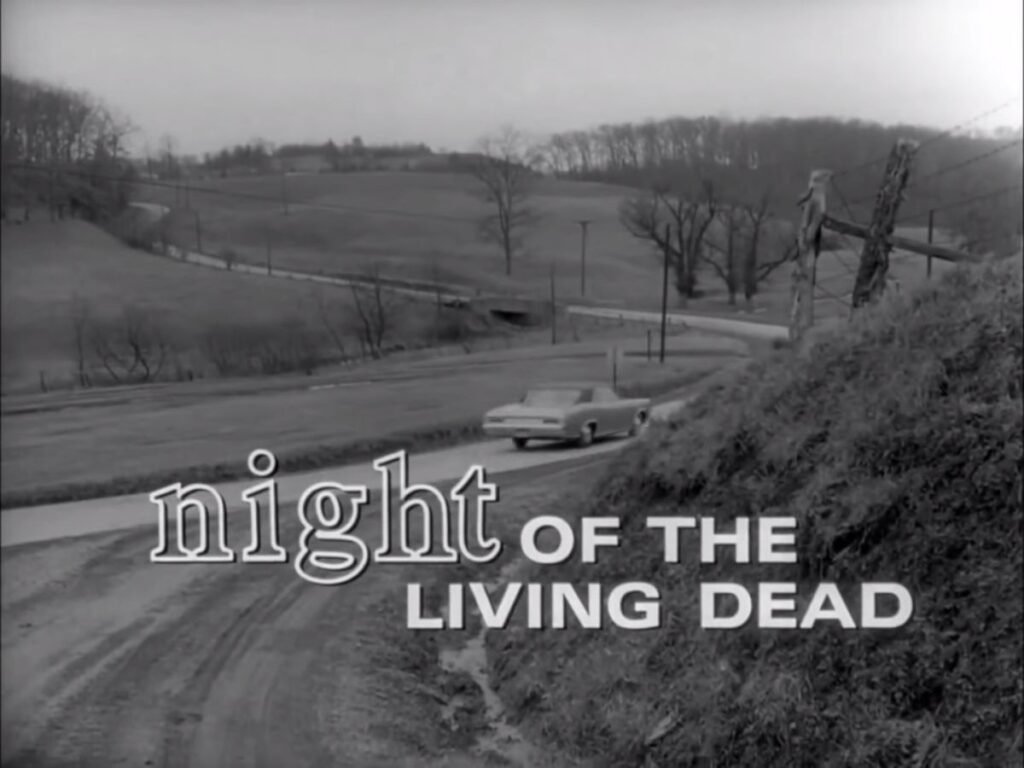
The public-domain title card above belongs to Romero’s Night of the Living Dead, the movie vocabulary Return gleefully starts vandalizing. It is useful context because Return understands the audience arrives carrying rules from other films.
Headshots? Cute idea.
One of the funniest and cruelest decisions is that destroying the brain does not neatly switch these zombies off. The warehouse crew attacks a reanimated cadaver, discovers the usual solution is not working, and eventually dismembers it.
Now they have several moving problems instead of one.
The group takes the pieces to a crematorium, where Ernie helps burn them. This seems like the responsible cleanup option. Smoke rises into the atmosphere, combines with a storm, and rains contaminated water directly onto a cemetery.
Congratulations. You solved one zombie by installing an entire graveyard expansion pack.
The talking dead are much worse
These zombies do not just groan. Some can speak, answer questions and use tools. One calls for more emergency responders after eating the first group. That gag is funny because the zombie has understood infrastructure.
It has discovered delivery.
The movie also gives its undead an ugly motive. Eating brains temporarily eases the pain of being dead. That does not make them friendly, but it adds a weird layer of suffering underneath the slapstick. The zombies are hungry because consciousness itself hurts.
That is a much darker idea than “walking corpse wants snack.”
Tarman is disgusting in exactly the right way
Some horror monsters are elegant. Tarman looks like somebody left a corpse in industrial syrup for several fiscal quarters.
The black, dripping zombie emerging from the canister became one of the film’s defining images because the design captures the movie’s tone perfectly. It is gross, slightly cartoonish and still legitimately threatening. When Tarman lunges, the joke does not make his teeth less dangerous.
That balance is why the comedy works. Return does not pause the horror so a comedy scene can happen. The comedy comes from people responding to an increasingly impossible disaster, often with very bad information.
The punk kids are not just body-count furniture
The cemetery crew arrives looking like the cast of a music video that wandered into the wrong apocalypse. Their names alone — Trash, Suicide, Scuz, Spider — tell you the movie is not aiming for documentary realism.
But the punk energy gives Return its pulse. The soundtrack, clothes and attitude keep the film moving even when the situation becomes hopeless. The characters joke, posture, panic and make choices that feel specific to them rather than functioning as identical zombie food.
Trash dancing in a graveyard is ridiculous foreshadowing. It is also exactly the sort of decision a movie this gleefully doomed should make.
The comedy stops being comfortable near the end
Frank and Freddy’s exposure to Trioxin creates a particularly nasty problem: they are not simply bitten victims waiting to die. Their bodies begin shutting down while they remain conscious enough to understand what is happening.
Frank’s final choice is one of the film’s sharpest tonal pivots. He enters the crematorium rather than become a danger. The sequence is sad, frightening and far removed from the movie’s goofiest jokes.
Return earns that shift because it never promised that funny meant safe.
And the military solution is unbelievably on-brand
The outbreak becomes uncontrollable. The military is contacted. Their solution is to fire a nuclear weapon at the contaminated area.
Problem solved?
Of course not. The blast sends more Trioxin-tainted material into the atmosphere. Rain begins again.
The ending does not close the loop. It makes the loop bigger.
Watch the trailer
It changed the joke without defanging the monster
The brain-eating zombie became such a common comedy image that it is easy to forget how specific Return‘s version was. These zombies are not funny because they are harmless idiots. They are funny because they are horrible, articulate problems attacking people in a movie with a wicked sense of humor.
That distinction matters.
Horror-comedy works best when neither half apologizes for the other. The Return of the Living Dead will make you laugh at a corpse using a radio and then remind you that a corpse smart enough to use a radio is a much bigger problem.
Send more paramedics, indeed.
Leave a Reply