
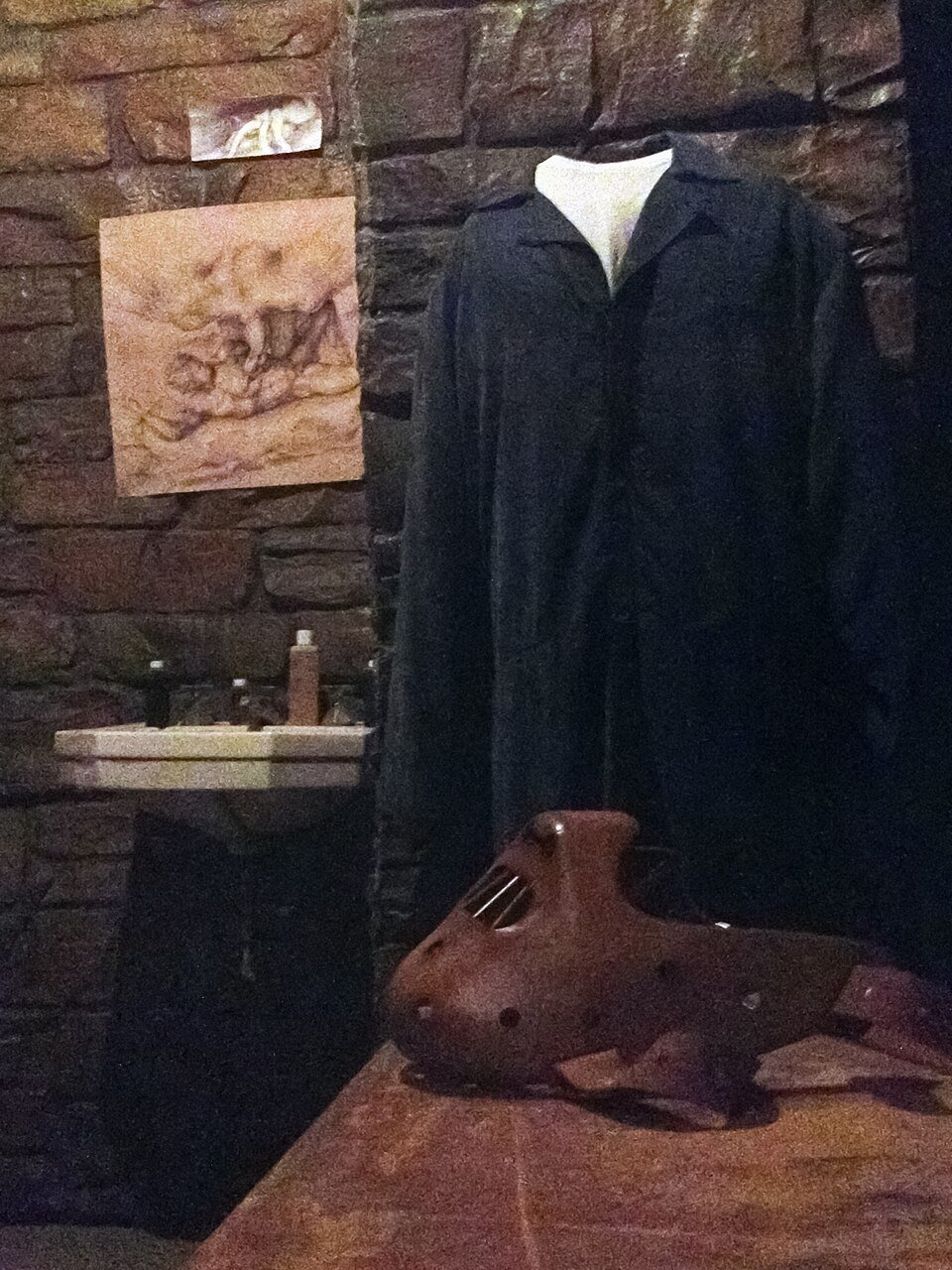
Hannibal Lecter owns the cultural memory of The Silence of the Lambs. The voice, the stare, the glass cell, the immaculate manners — he is the character people impersonate thirty years later. He is also not the killer Clarice Starling is actually trying to stop.
That distinction is one reason the movie works so well. Jonathan Demme gives Clarice two monsters with completely different relationships to her. One is locked up and dangerously useful. The other is free and actively killing.
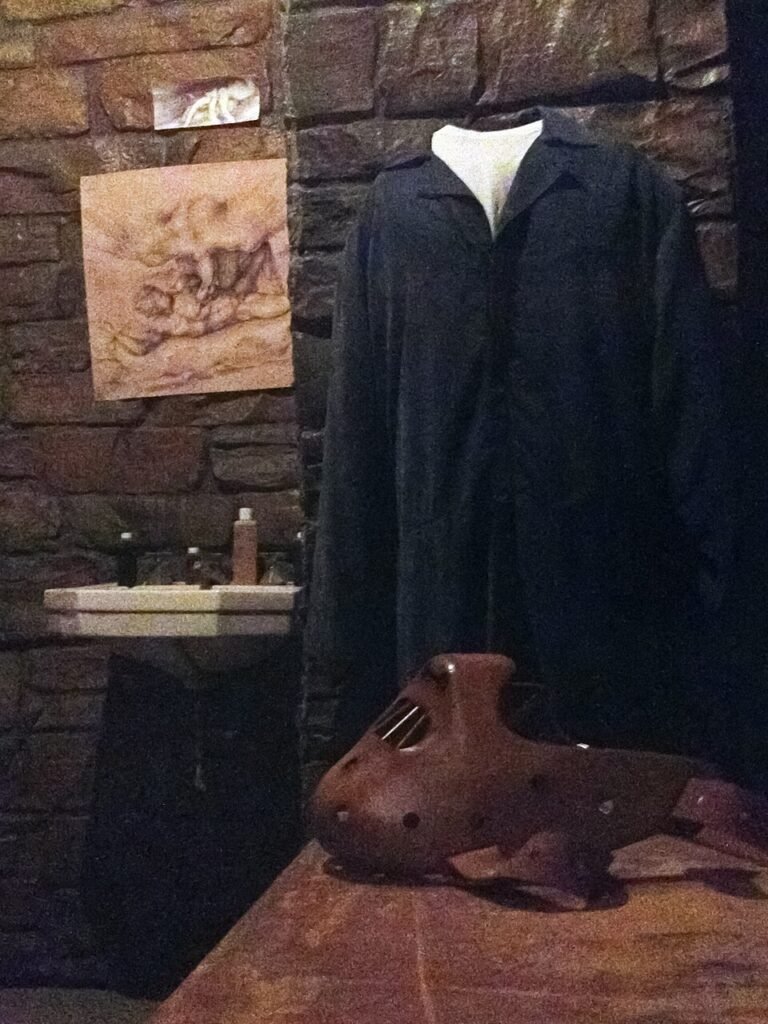
Lecter’s cell turns conversation into an action scene
When Clarice first walks toward Hannibal Lecter’s cell, nothing explodes. Nobody runs. The movie still makes the hallway feel like a gauntlet.
Lecter is contained behind glass, which creates a strange power balance. Physically, Clarice is safer than she would be in an open room. Psychologically, he has room to study her. He notices her accent, clothes, ambitions and discomfort. Every answer she gives becomes something he can turn over in his hands.
The result is a horror scene built out of attention.
Lecter looks at Clarice as if she is evidence.
That is scarier than shouting.
But the case belongs to Buffalo Bill
The FBI investigation centers on a serial killer nicknamed Buffalo Bill, who abducts women and leaves a disturbing pattern behind. Clarice is sent to Lecter partly because her supervisor Jack Crawford believes Lecter’s insight may help break the case.
This structure keeps Lecter from becoming a normal mastermind villain. He is not secretly orchestrating Bill’s crimes. He has knowledge and intuition that Clarice needs, and he enjoys controlling the price of access.
Every conversation is therefore a transaction. Clarice wants information. Lecter wants truth, stimulation and leverage.
He may help. He may humiliate her. He may do both in the same sentence.

Clarice is constantly being looked at
Demme repeatedly places faces close to the camera, especially during conversations. Men often look almost directly toward us as they speak to Clarice. The effect makes ordinary professional interactions feel invasive.
She is frequently the youngest person in the room, one of the only women, or both. An elevator full of taller male recruits makes the point without dialogue. A local sheriff’s office becomes another space where Crawford has to manage how information is discussed around her.
That visual pressure connects the movie’s procedural plot to Clarice’s experience. She is not just hunting somebody who objectifies women. She moves through environments where being evaluated is a constant background condition.
Lecter is simply the person most honest about doing it.
Lecter is frightening because restraint looks temporary
Anthony Hopkins plays him with almost no wasted movement. Lecter does not twitch and snarl to advertise danger. He waits.
Then his escape shows what that calm was containing.
The sequence in the temporary holding area is brutal because the movie has spent so long presenting Lecter as a conversational threat. Once he gets physical freedom, the violence is shocking but not inconsistent. The intelligence we admired has always belonged to the same man as the violence.
The cell was never his personality. It was furniture.
The basement climax remembers whose story this is
Clarice tracks Bill to a house without initially realizing she has found him. The discovery unfolds in stages: questions, recognition, a moth, a door, a pursuit.
Then the lights go out.
Bill can see Clarice through night-vision goggles while she reaches blindly through the basement. It is one of the movie’s cruelest reversals. For most of the film, Clarice has been looked at. Now the killer can literally watch her while remaining unseen.
She wins not because Lecter swoops in or Crawford reaches her in time. She listens. Bill’s weapon gives away his position. Clarice turns and fires.
The movie gives its final physical victory to the trainee who everybody else kept studying.
Lecter gets the last laugh because he is the unresolved threat
The graduation ending offers Clarice a moment of achievement, but Lecter calls. He is free, composed and already observing another target.
That final beat is why he dominates memory. Bill’s case can close. Lecter remains an open door.
He also occupies a strange role in the audience’s relationship with the movie. We enjoy watching him because he is intelligent, funny and charismatic. The film never lets charisma erase what he is capable of.
Being fascinating is not the same thing as being safe.
The Oscars noticed, too
At the 1992 Academy Awards, The Silence of the Lambs won Best Picture, Best Director for Jonathan Demme, Best Actor for Anthony Hopkins, Best Actress for Jodie Foster and Adapted Screenplay for Ted Tally. The Academy notes it was the first film since One Flew Over the Cuckoo’s Nest to sweep those five major categories.
That awards history is unusual for horror-adjacent material, but the movie’s craft explains why it crossed so many boundaries. It is a serial-killer thriller, a character study, a procedural and a horror movie where a polite conversation can feel more dangerous than a chase.
Watch the official trailer
Hannibal Lecter is not the main monster — he is the movie’s dangerous side door
Bill drives the case. Clarice drives the story. Lecter sits at the edge of both, offering information while steadily becoming the character the audience cannot stop watching.
That is more interesting than simply making him the boss battle.
He is useful and monstrous. Imprisoned and powerful. Occasionally helpful and never trustworthy.
The movie lets us enjoy every second he is on screen while keeping the glass between us.
Smart choice.
Leave a Reply