The Overlook Hotel doesn’t need to jump out from behind a door. It has doors. Lots of them. Too many of them, maybe. And after two hours inside The Shining, even a hallway can start looking guilty.
Stanley Kubrick’s 1980 adaptation of Stephen King’s novel is full of famous horror images — the twins, the elevator, Room 237, Jack Nicholson’s face coming through a broken door — but the movie’s most persistent weapon is the building itself. The Overlook is enormous, beautiful and almost impossible to relax inside. It turns architecture into a low-grade fever.
The hotel keeps refusing to make sense
Most movie locations are designed to help the audience understand where everyone is. The Shining often seems happier doing the opposite. The camera glides after Danny’s tricycle through long corridors, around corners and across wildly different floor surfaces. We learn the rhythm of the place without ever getting the satisfaction of a clean mental map.
That matters. A haunted house is scarier when you don’t trust the geography. Windows, corridors and room relationships can feel subtly impossible. You don’t have to sit there with blueprints to notice it. Your brain simply keeps failing to settle.
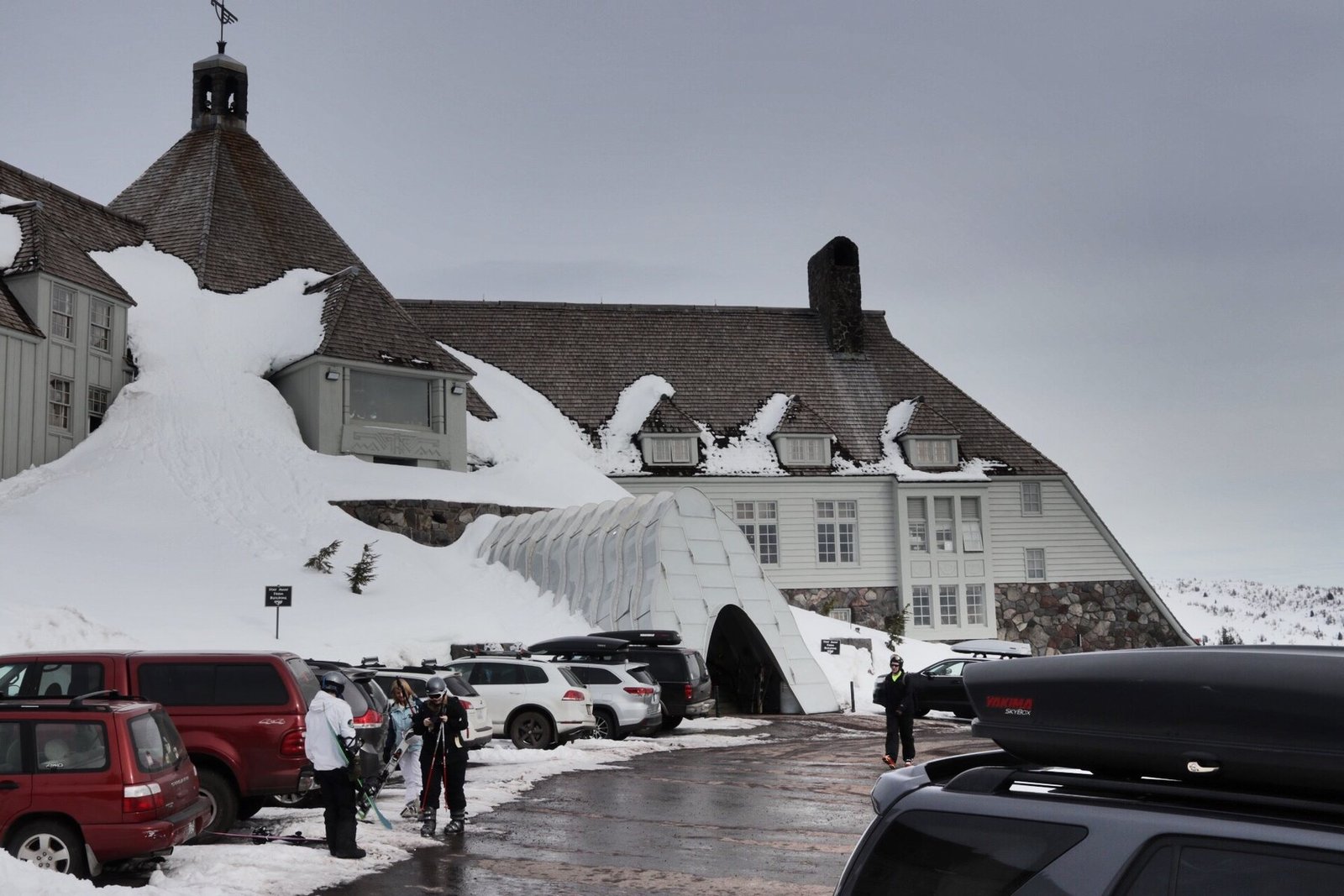
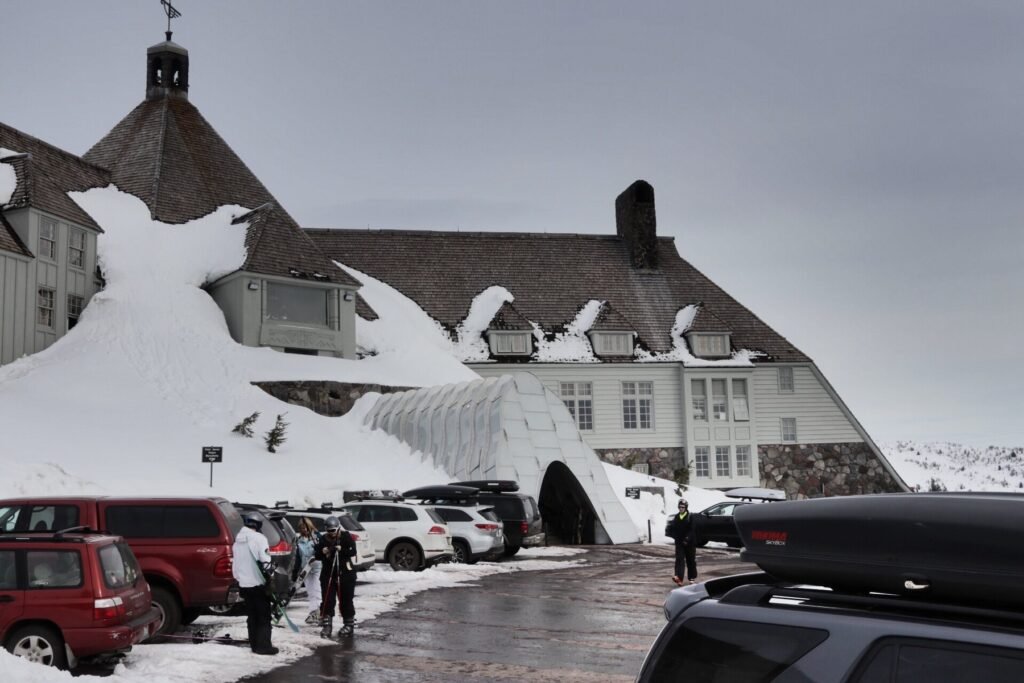
The Overlook’s exterior establishing imagery famously used Oregon’s Timberline Lodge, while the movie’s interiors were created as sets in England. That separation helps explain the dreamlike quality. The hotel is less a single practical building than a cinematic construction designed around camera movement, pattern and unease.
The camera moves like the hotel is watching
The Steadicam work is one of the movie’s signatures. Following Danny at child height does something that a normal eye-level shot can’t. Corners loom. Empty hallways become destinations. Every turn feels like a tiny reveal.
Kubrick also loves symmetry, and symmetry should feel reassuring. Here it becomes oppressive. Huge rooms center characters inside carefully balanced frames until they look less like residents than specimens. The hotel doesn’t have to chase anybody. It can simply surround them.
Then the movie breaks that formality with sudden visual intrusions: girls where there were no girls, blood where there should definitely not be blood, a person in an animal costume you probably didn’t expect to discuss at breakfast. The calm compositions make the impossible images hit harder because the movie spends so much time looking controlled.
Isolation turns Jack’s worst qualities up to maximum
Jack Torrance arrives already carrying problems. He has hurt Danny in the past. His drinking has damaged the family. His relationship with Wendy is strained before the snow arrives. The Overlook doesn’t need to create a perfect man and corrupt him from scratch; it finds the cracks that are already there and pushes.
That makes the haunting and the domestic horror hard to separate. When Jack becomes more hostile, Wendy isn’t only dealing with a supernatural hotel. She’s dealing with a husband whose resentment has been given permission to grow. The grand ballroom ghosts can be read as seduction: a fantasy where Jack is welcomed, served and told that his anger is justified.
Meanwhile Danny’s “shining” gives him access to things adults either can’t or won’t understand. His visions turn the hotel’s history into something present tense. He isn’t discovering a spooky backstory in a dusty book; the past walks into the hallway.
The sound of nothing happening
Plenty of horror movies announce danger. The Shining often lets silence and mechanical sound do it. Danny’s tricycle wheels move from carpet to hard floor and back again. The pattern is ordinary, but the movie repeats it until you’re waiting for the next corner to contain something awful.
That technique is almost rude in its simplicity. No creature needs to roar. A kid rides a toy through a hotel. The audience supplies the panic.
Even the bigger musical cues don’t necessarily tell us what a threat is. They tell us that the environment itself is wrong. By the time Jack is stalking the halls, the movie has trained us to treat the Overlook as an active participant.
Room 237 works because explanation would make it smaller
The film gives us history, ghosts and specific events, but it never turns the hotel into a neat rulebook. There isn’t a scene where somebody explains the exact supernatural operating system. That restraint keeps the Overlook larger than any one ghost story.
Is the hotel feeding on Danny’s ability? Is it using Jack? Is Jack joining something that has always been there? The film supplies evidence, not a customer-service FAQ. The final photograph only makes that feeling stronger. Instead of closing the case, it opens a much older one.
Watch the trailer
Why the Overlook still feels wrong
A lot of haunted-house movies ask whether there is a ghost in the room. The Shining makes you suspicious of the room.
That’s the difference. The Overlook doesn’t feel like a normal hotel where paranormal events happen. It feels like the events and the building are the same thing. The carpet, doors, impossible distances and huge empty rooms all become part of the haunting.
So yes, Jack with an axe is scary. The twins are scary. The bathroom conversation is scary. But the movie gets you much earlier than that. It gets you the first time Danny turns a corner and you realize you’re bracing for a hallway.
Leave a Reply